Barnsbury Square moving tips: parking & narrow streets
Posted on 27/04/2026
Barnsbury Square moving tips: parking & narrow streets
Moving in Barnsbury Square can feel deceptively simple on a map, then suddenly complicated the moment a van meets a tight turn, a parked car blocks the kerb, or the only sensible loading spot disappears. That is exactly why practical Barnsbury Square moving tips: parking & narrow streets matter. If you plan ahead, you can save time, reduce stress, and avoid the kind of moving-day chaos that turns a straightforward job into a long, tiring scramble.
This guide is built for real conditions: narrow residential streets, limited stopping space, awkward loading angles, and the usual moving-day pressure to get everything done quickly. You will find a clear step-by-step approach, a realistic checklist, and advice on when a local man and van service in Barnsbury or a wider removal service is the smarter choice. The goal is not to make moving sound easy. It is to make it manageable.
Quick takeaway: in tight streets, the move is won or lost before the first box is lifted. Parking, access, and carrying distance matter just as much as packing.
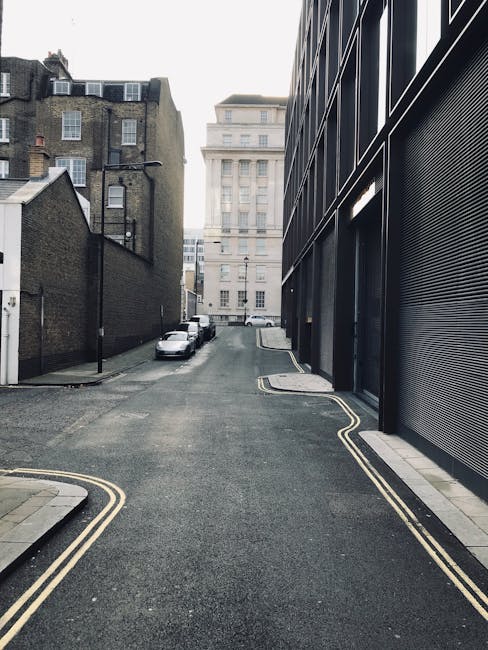
Why Barnsbury Square moving tips: parking & narrow streets Matters
Barnsbury Square and the surrounding streets present the kind of access challenges that can quietly multiply moving time. Even a well-packed home can become awkward if the van cannot stop close enough to the entrance, if the street is too narrow for easy passing, or if there is no obvious place to pause while you carry furniture.
That matters for three practical reasons. First, every extra metre between the van and the front door increases labour. Second, the more times you carry items back and forth, the greater the risk of knocks, scrapes, and fatigue. Third, poor parking decisions can create tension with neighbours and slow the move for everyone involved.
In a tight area, the difference between a smooth move and a miserable one often comes down to preparation. A thoughtful approach is especially useful for flats, maisonettes, and smaller houses where stairwells, narrow hallways, and limited frontage combine with constrained street parking. If that sounds familiar, you may also find it useful to read about flat removals in Barnsbury and the practical planning behind house removals across Barnsbury.
Expert summary: on narrow streets, moving success depends less on brute force and more on access planning, timing, and sensible vehicle choice.
How Barnsbury Square moving tips: parking & narrow streets Works
The working principle is straightforward: reduce uncertainty before moving day. That means checking where a van can safely stop, how long it can stay there, how easy it will be to carry items from the property to the vehicle, and whether the route includes obstacles such as tight bends, low branches, or regular traffic flow.
A good plan usually has four parts:
- Access assessment - work out the practical loading point, not just the nearest point on the map.
- Vehicle matching - choose a van size that suits the street, turning space, and load.
- Timing - schedule the move around traffic, school runs, commuter peaks, or predictable congestion.
- Carry strategy - decide whether you will use one long carry, a short staging point, or a shuttle approach.
That final point is often overlooked. If the van cannot sit directly outside, a sensible staging point can make all the difference. For example, items may be carried from the front door to a safe spot closer to the van, then loaded in batches. It is not glamorous, but it works.
For larger or heavier items, the access plan should be matched with safe handling. If you are moving awkward furniture, the guidance in solo heavy object lifting advice and expert piano moving guidance is especially relevant. The street may be narrow, but the responsibility to move safely does not shrink with it.
Key Benefits and Practical Advantages
When you get parking and access right, the benefits are immediate and easy to feel on moving day.
- Less carrying distance: shorter trips mean lower effort and faster loading.
- Reduced damage risk: fewer tight corners and fewer hurried lifts reduce the chance of knocks.
- Better neighbour relations: planned loading is less disruptive than improvised stopping.
- More predictable timing: you are less likely to lose half an hour searching for a workable space.
- Lower stress: calm logistics are often the biggest win of all.
There is also a hidden benefit: better decision-making. Once you have a realistic plan for the street, you can choose whether some items are better moved separately, stored briefly, or protected with extra wrapping. That is where services like secure storage in Barnsbury can help if your moving dates do not align neatly.
For many people, the right parking plan is the difference between a move that feels organised and one that feels like a never-ending relay race with boxes.
Who This Is For and When It Makes Sense
This advice is for anyone moving in or around Barnsbury Square where street access is tighter than average. That includes tenants, first-time buyers, families, students, landlords, and office movers who need a practical way to handle loading restrictions.
It makes particular sense if you are:
- moving from a flat with limited frontage or stair access;
- arranging a move during busy weekday traffic;
- transporting fragile, heavy, or unusually large items;
- working with a small team and limited time;
- trying to avoid multiple trips because parking is awkward.
Students and renters often underestimate access problems because the move looks small on paper. In practice, a compact flat move can be just as challenging if the street is narrow and the van has to park further away than expected. For that kind of move, a local student removals service or a flexible same-day removals option may be worth considering.
Likewise, if you are moving office equipment, delicate furniture, or several workstations, you may be better served by a properly coordinated office removals team rather than trying to make a tight street work on guesswork.
Step-by-Step Guidance
Use this sequence to reduce surprises and keep the day under control.
1. Survey the street before the move
Walk the route from your property to the nearest practical stopping point. Look at width, parked cars, one-way sections, bends, and whether the pavement is wide enough to stage boxes safely. If you can, check at the same time of day as your move. A quiet road at 10 a.m. can look very different at school-run time.
2. Decide where the van will actually stop
Do not rely on the nearest open space appearing at the right moment. Identify one primary loading spot and one backup spot. Make sure both allow the driver enough room to manoeuvre and let you carry items without weaving around obstacles.
3. Match vehicle size to the street
A larger van may reduce the number of trips, but it may be harder to position in a narrow road. Sometimes a slightly smaller vehicle is the smarter choice because it can park more cleanly and reach the door more easily. If you need help choosing, a removal van suitable for Barnsbury streets can be a better fit than a one-size-fits-all approach.
4. Pack with access in mind
Label boxes by room and priority, but also think about the loading sequence. Items needed first should be easiest to reach. Heavier boxes should be packed compactly rather than overfilled. If you want a deeper packing refresher, the guide on advanced packing techniques is a useful companion piece.
5. Protect walkways and the property
Use covers, blankets, or basic floor protection where required. Narrow hallways are less forgiving than open spaces, so a small turn can become a scrape if furniture edges are unprotected. This is especially relevant for sofas, mattresses, and dining tables.
6. Time the loading window carefully
Start early enough to avoid rushing, but not so early that the street is full of parked vehicles from overnight or commuter activity. If you have control over timing, mid-morning often works well in residential areas because the early rush has passed and the afternoon build-up has not yet started.
7. Use a carry plan for longer distances
If the van cannot be placed directly outside, break the move into manageable sections. One person can guide and spot while others carry. For longer carries, reduce load weight and consider more trips rather than trying to force one heavy run. If you need technique guidance, see safe heavy-lifting tips and the related article on kinetic lifting fundamentals.
8. Confirm access at both ends
Do not focus only on the pick-up address. The delivery address may have different parking limits, tighter turning space, or a loading bay that is occupied when you arrive. Two tricky streets in one day can double the challenge.
9. Keep a small buffer for the unexpected
Someone will park where they should not, a delivery van may appear, or the weather may turn awkward. That is normal. Build in a margin so you are not planning right up to the edge of the schedule.
Expert Tips for Better Results
Small details matter more than people think in Barnsbury-style moves. The following tips usually pay off.
- Photograph the street in advance. Pictures help the moving team understand turning space, kerb access, and where obstacles sit.
- Measure bulky items. A wardrobe that fits the door may still be miserable on a tight staircase.
- Separate the essentials. Keep keys, documents, chargers, and basic toiletries in one clearly marked bag.
- Pre-plan furniture dismantling. Do not wait until the street is blocked to start removing bed frames or table legs.
- Use the right protection for delicate items. Mirrors, glass shelves, and screens need more than a quick wrap in a towel.
- Leave room for the driver to work. A van that is boxed in by parked cars or neighbours makes loading slower and less safe.
If you are storing furniture before or after the move, a properly organised plan for wrapping and stacking matters just as much as the transport stage. The post on professional sofa storage advice offers a good example of that approach.
Truth be told, the best moving days often look calm precisely because the planning was slightly obsessive. That is not a flaw. It is the whole point.

Common Mistakes to Avoid
Most access problems are preventable. The most common missteps are usually simple, but costly in time and energy.
- Assuming the van can stop "near enough". Near enough can become a very long carry.
- Ignoring local traffic patterns. A quiet-looking road may be busier than expected at peak times.
- Forgetting staircase and doorway constraints. Street access is only one part of the puzzle.
- Overpacking boxes. Heavy boxes are harder to move through narrow spaces and more likely to drop.
- Leaving dismantling until the last minute. That creates pressure at the exact moment you need order.
- Not checking where the delivery vehicle will park. A smooth pickup can be undone by a difficult drop-off.
- Trying to move too much in one pass. Narrow streets punish rushed, overloaded trips.
One easy mistake is forgetting about cleaning and handover tasks until the van is already full. If you are completing a tenancy or moving out of a managed property, a move-out preparation guide and a clear decluttering plan can save a lot of last-minute scrambling.
Tools, Resources and Recommendations
You do not need specialist equipment for every move, but a few practical tools make narrow-street moving much easier.
- Furniture blankets and covers for doors, edges, and delicate surfaces.
- Ratchet straps and tie-downs to keep items stable in transit.
- Dollies or trolleys for boxes and heavier items where surface conditions allow.
- Marker pens and labels for quick room identification.
- Gloves with grip for improved handling.
- Measuring tape to confirm clearances for large furniture.
- Door protection and corner guards for tight interiors.
Service-wise, it helps to look at the broader picture rather than only the van. A reliable services overview can help you compare what is included, while pricing and quotes should give you a clearer sense of scope before the moving day arrives. If you need a more compact service model, a man with a van in Barnsbury can be a sensible fit for smaller loads and short urban journeys.
For readers comparing broader removal options, it is also worth understanding how a local removal company differs from a one-person or two-person van setup. The right choice depends on access, volume, and how much lifting you want to do yourself.
Law, Compliance, Standards, or Best Practice
Moving in a busy residential area is partly about convenience and partly about good practice. Exact parking rules depend on the street, local restrictions, and any permissions that may apply, so it is wise to check the situation carefully before moving day rather than relying on assumptions.
As a general best practice, aim to:
- avoid blocking driveways, crossings, or emergency access;
- park only where stopping is lawful and safe;
- keep footways clear for pedestrians wherever possible;
- follow any building or estate instructions if you are moving from a managed property;
- work in line with basic manual-handling safety principles.
Manual handling deserves respect. Narrow streets encourage awkward carrying, and awkward carrying raises the risk of strain. If a job feels beyond what one person should lift safely, pause and re-plan. The guidance on heavy lifting by yourself is useful, but the honest answer is sometimes to ask for help instead of proving a point to a wardrobe.
Insurance is another sensible consideration. If you are hiring help, check what cover is in place and what the moving team expects from you. A trusted provider should be willing to explain this clearly; that is why pages like insurance and safety and health and safety policy are worth reviewing before you book.
Options, Methods, or Comparison Table
There is no single best way to handle a move in Barnsbury Square. The right approach depends on access, volume, and how much time you have.
| Method | Best for | Strengths | Limitations |
|---|---|---|---|
| Direct outside loading | Short, open frontage with manageable parking | Fastest, least carrying, easiest to organise | Not always possible in narrow streets |
| Short-stay staged loading | Tight roads with a usable nearby stopping point | Flexible, practical, often realistic in residential areas | Requires coordination and careful timing |
| Shuttle approach | Restricted access or awkward parking windows | Can work even when the van cannot sit close to the property | More trips and more labour |
| Full removal team | Larger homes, valuable items, or time-sensitive moves | Less physical burden, better coordination, often safer for bulky items | Usually more expensive than a basic van-only service |
For bulky or fragile items, the full removal option can save a surprising amount of time. If your move includes a piano, for example, the specialist route is usually far more sensible than improvising. The same thinking applies to large sofas, mattresses, and other awkward pieces that do not like tight stairwells.
Case Study or Real-World Example
Consider a typical Barnsbury Square flat move with a two-bedroom load, a fridge-freezer, a bed frame, a sofa, and around twenty medium boxes. The property sits on a narrow road with parked cars on both sides, and the nearest uninterrupted stopping space is not directly outside the entrance.
In that situation, the most efficient plan is usually:
- survey the street the day before and identify two possible loading points;
- pre-dismantle the bed frame and remove loose fittings from larger furniture;
- set aside a protected staging point inside the property;
- load the van in the order items will be needed at the destination;
- move the heaviest pieces first while the team is fresh;
- keep smaller boxes grouped by room so unloading remains organised.
That approach may sound simple, but it avoids the classic trap of carrying random items in random order. The move becomes a sequence instead of a scramble. If the household is also trying to finish cleaning before departure, pairing the move plan with a stress-reduction strategy can make the day feel much more controlled.
One particularly useful detail in this kind of move is protecting traffic flow. If the van cannot stop directly outside, having one person ready to guide the driver and another ready to receive boxes prevents confusion. It is a small thing, but on a cramped street it often saves the most time.
Practical Checklist
Use this checklist a few days before moving day, then again on the morning itself.
- Confirm the moving date, time, and access window.
- Walk the street and identify the best loading point.
- Check for narrow turns, parked cars, and height restrictions.
- Measure large furniture and confirm whether it needs dismantling.
- Book the right van size or removal team for the access conditions.
- Prepare labels, tape, blankets, and straps.
- Pack a first-night essentials bag.
- Notify neighbours if the street may be temporarily busier than normal.
- Keep pathways, entrances, and stairs as clear as possible.
- Have a backup plan if the first loading spot is unavailable.
- Keep documents, keys, and valuables with you.
- Build in extra time for parking, walking distance, and unexpected delays.
If you are still packing at this stage, start with the obvious quick wins. The article on packing methods that actually save time is a good next read.
Conclusion
Moving in Barnsbury Square is less about brute strength and more about planning around the street in front of you. If parking is tight and the roads are narrow, the best approach is to reduce the number of unknowns: choose the right stopping point, match the vehicle to the access, pack with the carry route in mind, and leave enough time for the unexpected.
That is the practical heart of Barnsbury Square moving tips: parking & narrow streets. Once you understand the access problem, the rest of the move becomes much easier to manage. And if the move feels more complicated than a standard van-and-box job, there is no shame in using a local service that knows the area and understands the realities of tight residential streets.
Get a free quote today and see how much you can save.
For a confident next step, review the services, compare your options, and choose the support level that fits your street, your timetable, and your furniture. A good plan now is worth a lot less stress later.