Skip hire vs council collection in Barnsbury: legal tips
Posted on 29/07/2026
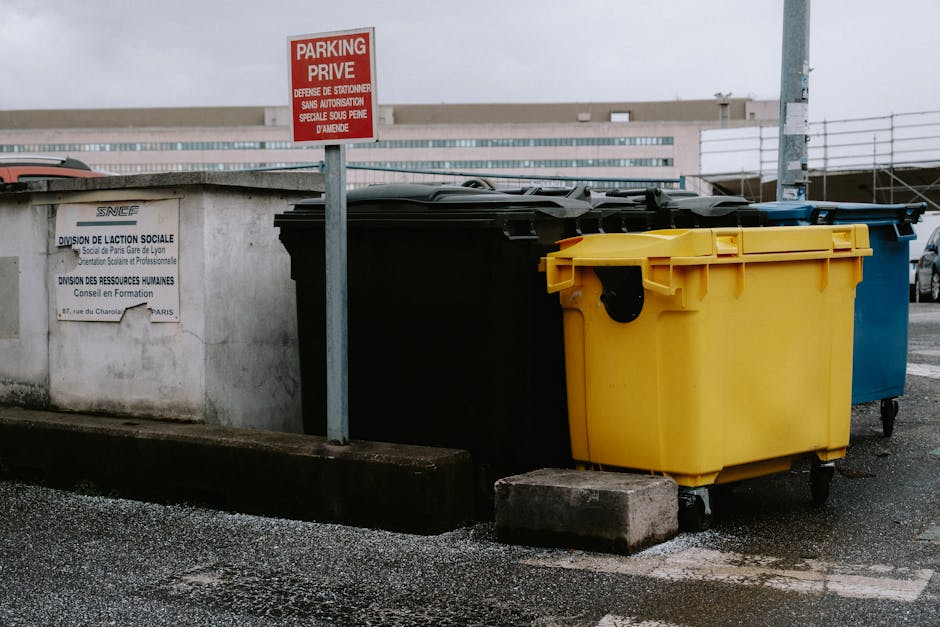
If you are clearing a flat, emptying a garden, or dealing with a pile of bulky waste after a move, the choice between skip hire and council collection can feel oddly technical. In Barnsbury, it is also a little more delicate than people expect. Space is tight, parking is precious, and the wrong setup can lead to delays, complaints, or an avoidable fine. This guide breaks down skip hire vs council collection in Barnsbury: legal tips in plain English, so you can choose the safest, most sensible option without guessing your way through it.
We will look at how each option works, where the legal tripwires usually sit, and how to avoid the classic mistakes that cause headaches for London households. If you are already planning a move, you may also find it helpful to read about decluttering before a move and avoiding bulky waste fines in Barnsbury. A bit of planning now saves a lot of faffing later.
Why Skip hire vs council collection in Barnsbury: legal tips Matters
Waste removal sounds simple until you try to do it in a dense part of North London. Barnsbury has narrow streets, controlled parking, Victorian terraces, and plenty of shared access points. That mix makes legality matter more than most people realise. A skip placed badly can obstruct traffic or sit on land without the right permission. A council collection booked too casually can leave rubbish sitting outside for too long, attracting complaints or becoming non-compliant if items are not presented correctly.
The real issue is not just convenience. It is responsibility. Whoever arranges the waste removal should think about where the waste is stored, who owns the land it sits on, whether a permit is needed, whether the waste type is accepted, and who is accountable if something goes wrong. That last bit is often overlooked. Let's face it, nobody wants to be the person arguing with a neighbour at 7:30 in the morning because a skip has blocked half the road.
There is also a timing angle. If you are moving and clearing out at the same time, waste removal can affect your loading plan. In Barnsbury, that means you may need to coordinate with parking restrictions, access limits, and the realities of tight streets. For those situations, it is worth understanding related local concerns such as permit considerations for Barnsbury moving vans and parking suspensions and loading bays.
How Skip hire vs council collection in Barnsbury: legal tips Works
Skip hire in practical terms
Skip hire means a private company drops a skip at or near your property, and later collects it once you are done. It is usually the better option when you need a container on site for several days, or when the waste will be generated gradually. Think of a flat clearance, renovation debris, or a pre-move purge that happens over a weekend rather than in one go.
The legal side depends on where the skip sits. If it is entirely on private land, that is one thing. If it goes on the public highway, even partly, you usually need the appropriate permission and safety arrangements. That can involve conditions around placement, visibility, and time on site. In practice, the biggest risk is not the skip itself; it is placing it somewhere that causes a nuisance or breaches local controls.
Council collection in practical terms
Council collection is usually a booked uplift or bulky waste service arranged through the local authority. It is generally best for households that have a limited number of items and want someone else to collect them from outside the property. It can be a neat solution for a few bulky pieces, small appliances, or a one-off clear-out.
But council collection has its own rules. Items may need to be booked in advance, presented on a certain day, and separated by type. If the collection is missed, rejected, or left outside too early, the waste can become an issue. Also, council services are not always designed for the same volume, flexibility, or speed as private hire. If you have a lot of waste, or awkwardly shaped items, it can become fiddly quickly.
What "legal" really means here
When people ask for legal tips, they often mean: what do I have to do to avoid trouble? Fair question. In this context, legality usually comes down to these basics:
- placing waste only where you are allowed to place it
- not obstructing pavements, access routes, or traffic
- using an approved arrangement for skips or collections
- sorting waste appropriately where required
- keeping records, receipts, or confirmation emails in case of dispute
- making sure sharp, hazardous, or restricted items are handled properly
None of that is glamorous, obviously. But it is the stuff that keeps an ordinary clear-out from turning into a stressful little mess.
Key Benefits and Practical Advantages
| Option | Best for | Main advantage | Typical legal pressure point |
|---|---|---|---|
| Skip hire | Larger clearances, renovations, staged decluttering | Capacity and flexibility over several days | Placement, permit needs, obstruction risk |
| Council collection | Small to medium bulky waste jobs | Simple one-off uplift from outside the property | Booking rules, presentation rules, item limits |
| Private removal support | Moves with furniture, stairs, and mixed waste | Hands-on lifting and a more tailored service | Access, parking, insurance, responsibility for handling |
Skip hire tends to win on capacity and convenience if you have several loads to remove. Council collection wins on simplicity for smaller jobs, especially when you do not want a skip sitting outside for days. Both can be sensible. Neither is automatically "better." The right call depends on your volume, timing, access, and tolerance for admin.
There is also a hidden benefit to choosing well: fewer chances of rushed disposal. If you can separate keep, donate, recycle, and throw away, you will often avoid paying for space you do not need. A quick declutter session, followed by a clear disposal plan, is usually more effective than dragging everything into one giant pile and hoping for the best. We have seen that exact pile. It always looks worse at 9 pm than it did at 5 pm.
If you are trying to get a home move under control at the same time, it can help to pair waste planning with broader moving prep. A useful starting point is stress-free moving solutions and preparing your living space for a new chapter.
Who This Is For and When It Makes Sense
This decision matters most if you are in one of a few common situations.
- Home movers who need to clear unwanted furniture, packaging, or old appliances before handover.
- Flat residents dealing with limited access, stairs, or communal areas where rubbish can become a problem fast.
- Landlords and tenants sorting end-of-tenancy clearances under time pressure.
- Renovators removing broken plasterboard, fixtures, or mixed builder's waste.
- Families doing a long-overdue declutter and needing somewhere practical for the excess.
Skip hire usually makes sense when waste volume is high and you need a bit of breathing room. Council collection usually makes sense when you have a defined list of items and want a more budget-conscious, low-fuss pickup. If you are somewhere in the middle, the choice can be tricky. That is normal.
Truth be told, Barnsbury properties often push people toward a hybrid approach: a little council uplift for the manageable items, then a private solution for the awkward or bulky stuff. That can be especially helpful in older buildings where a sofa, mattress, and dismantled wardrobe all seem to have opinions about the staircase.
Step-by-Step Guidance
- List everything you need to remove. Be specific. A chair and a three-seater sofa are not the same problem. A box of books is not the same as an old fridge.
- Separate the waste by type. Reusable, recyclable, bulky, electrical, and general waste should not all be treated as one thing. Sorting early saves time later.
- Check your access. Measure the route out of the property, note narrow hallways, and think about where a skip or collection point could actually go.
- Decide how long you need the solution for. If the waste will build over days, skip hire may be better. If it is one lift-out, council collection may suit you more.
- Check whether parking or placement restrictions apply. In Barnsbury, this matters a lot. A bad placement can lead to obstruction or enforcement problems.
- Confirm what is allowed. Not every service accepts every item. Mattresses, electricals, paint, gas cylinders, and some renovation waste can need special handling.
- Keep proof. Save booking confirmations, photos of the waste condition if useful, and any correspondence about placement or access.
- Schedule around neighbours and moving day. If you are doing a major move, line up collection timing with loading windows so you do not block your own route.
If your clear-out includes heavy or awkward items, it is worth thinking about safe lifting too. For practical handling advice, have a look at solo heavy object lifting guidance and fixes for tight Barnsbury stairs. That combination of disposal planning and safe movement is where a lot of people either save the day or make it harder than it needs to be.
Expert Tips for Better Results
Think access first, waste second. It sounds backwards, but in Barnsbury the route in and out often decides everything. A perfectly chosen disposal option is useless if nobody can move the item safely or legally.
Use the smallest compliant option that fits the job. People often over-order. To be fair, that is understandable. You do not want to run out of space halfway through. But paying for excess capacity is rarely smart, and it can make an already tight street even more cumbersome.
Book around local traffic rhythms. Early morning can be quieter. Late afternoon can be messy. If you are arranging access, think about school runs, delivery vans, and that general London shuffle where everyone seems to arrive at once.
Take photos before things move. This helps with disputes, insurance questions, and general clarity. It is boring, yes. Very boring. But useful.
Keep hazardous items out of the mix. Paint, solvents, batteries, gas canisters, and similar items may need separate arrangements. Do not quietly slip them into the nearest pile and hope no one notices. That is exactly how jobs get complicated.
Plan the end state. Once the waste is gone, what happens next? If you are replacing furniture, moving home, or storing seasonal items, services such as storage in Barnsbury or packing and boxes support may make the rest of the process feel far calmer.

Common Mistakes to Avoid
- Assuming any skip can go anywhere. Placement matters. Public highway use is not the same as private land use.
- Leaving council waste out too early. That can create obstruction, complaints, or collection problems.
- Mixing restricted items with general waste. Some things need special handling, and a mixed pile can be rejected.
- Forgetting about weight. Heavy waste may matter as much as volume, especially with soil, rubble, or old fixtures.
- Blocking communal areas. Hallways and shared entrances are not storage zones. Not even for a short while.
- Ignoring building rules. Leasehold and block management conditions can be stricter than people expect.
- Leaving the decision until the last minute. That is the big one. A rushed choice usually costs more and causes more stress.
A small but important point: if you are moving out of a flat, waste removal, parking, and loading often need to work together. It is rarely wise to treat them as separate jobs. You can read more about that broader planning mindset in urgent move solutions for Barnsbury tenants and access and loading tips near Union Chapel.
Tools, Resources and Recommendations
You do not need a huge toolkit, but a few simple things make the process much easier:
- measuring tape for checking access and item sizes
- marker pen for labelling keep/recycle/dispose piles
- sturdy gloves for handling rough edges and dirty materials
- protective floor coverings for hallways and stairs
- basic screwdrivers or an Allen key for dismantling furniture
- moving blankets or wraps for protecting reusable items
- bags or boxes for small loose debris
On the planning side, the most useful resources are often the ones already in front of you: your tenancy or building documents, booking confirmations, and any written notes about parking or access. If you are coordinating a more complex move, it may also help to review Barnsbury Square parking and narrow street tips and best times and routes for N1 moves.
For readers who want a more complete moving plan, our broader services overview and recycling and sustainability approach may help you think beyond the immediate clear-out. Waste is not just something to get rid of; ideally, it is something to handle responsibly.
Law, Compliance, Standards, or Best Practice
This is the section where people usually want certainty, and the honest answer is that details can vary by property type, item type, and how the waste is being stored or moved. So, keep this plain and cautious: if you place a skip on public land, you should expect formal permission or licensing requirements to apply. If you use council collection, follow the booking rules exactly and only present items as instructed. If you are dealing with multiple parties, agree who is responsible for each part of the process.
Best practice in Barnsbury is to avoid assumptions. Do not assume your frontage is private just because it feels like it. Do not assume a skip can overhang a footpath without issue. Do not assume bulky waste can be left out for multiple days because "everyone does it." Sometimes everyone does it badly. That is not a defence, it is just a queue for trouble.
From a compliance point of view, a sensible checklist is:
- confirm whether the waste sits on private or public land
- check whether any permission is needed for placement
- verify what waste types are accepted
- avoid overfilling or unsafe stacking
- keep pathways clear for pedestrians and neighbours
- choose a provider or service that gives you clear instructions in writing
There is also a broader safety element. Heavy items, sharp edges, and awkward manoeuvres can injure you or damage shared property. For that reason, it is wise to review our health and safety policy and insurance and safety guidance if you are planning a larger removal or clearance.
Options, Methods, or Comparison Table
| Factor | Skip hire | Council collection |
|---|---|---|
| Best for | Large, ongoing, mixed clearances | Smaller, defined bulky waste jobs |
| Speed | Fast to start once delivered | Depends on local booking slots |
| Convenience | Very convenient on site | Convenient if items can be presented correctly |
| Space required | Needs room for delivery and collection | Usually less space, but items must be placed properly |
| Legal attention | Placement, permit, obstruction risk | Booking compliance, presentation rules |
| Flexibility | Good for gradual fill | Less flexible, more structured |
| Cost shape | Often easier to budget for larger jobs | Often better for small one-off disposals |
The table is the short version. The long version is that the right answer depends on where you live, how much waste you have, and how much control you want over the timing. If your job is complex, private support may end up saving time even if the upfront cost feels higher. If your job is tiny, council collection may be the neatest move. Simple, but not simplistic.
Case Study or Real-World Example
Imagine a tenant in Barnsbury finishing a flat move on a wet Thursday evening. There is a broken shelf, two black bags of unwanted clutter, an old bedside table, and a mattress that has seen better decades. At first glance, skip hire sounds tempting. But the building has limited frontage, a narrow pavement, and no obvious space for a skip without causing problems.
In that situation, a council collection might work for the bags and smaller bulky items if they fit the service rules. The mattress and table may still need separate handling, depending on what is accepted. If the resident also needs help moving the heavier items down tight stairs, a removal support service can bridge the gap between disposal and transport. That is where a careful, step-by-step plan beats a rushed one.
Now flip the scenario. A homeowner is clearing a basement, a spare room, and a shed before renovation. The waste is arriving over several days: broken shelving, plaster offcuts, old toys, cardboard, and damaged furniture. In that case, skip hire is probably the better fit because it gives flexibility and avoids repeated bookings. The legal task then becomes simple but important: place it properly, keep it tidy, and do not overload it with restricted items.
That sort of decision-making is very common around Barnsbury because properties vary so much. One street, one block, one doorway - and completely different practical realities. Funny old thing, really.
Practical Checklist
Use this before you book anything.
- Have I counted the waste by item, not just by "pile"?
- Do I know whether the waste will be on private land or public land?
- Will I need a permit, booking confirmation, or written approval?
- Are there any restricted items in the load?
- Can the route out of the property handle the items safely?
- Have I checked for parking, loading, or access constraints?
- Will council collection timings suit my schedule?
- Is the waste likely to build up over several days?
- Do I need help with lifting, dismantling, or protection?
- Have I saved photos and records in case I need them later?
If you have answered "not sure" to several of those, pause and re-check. A 10-minute review now can prevent a messy afternoon later. And yes, the checklist is a bit unglamorous. It is also the sort of thing that quietly saves your sanity.

Conclusion
Choosing between skip hire and council collection in Barnsbury is really about matching the method to the job, then making sure the legal details are handled properly. If you need flexibility, volume, and time, skip hire may be the better fit. If you need a simple, smaller, one-off removal, council collection may be enough. What matters most is not just the disposal method itself, but where it goes, how it is presented, and whether the arrangement fits the street and property you are dealing with.
My honest advice? Start with access, then volume, then timing. That order usually gets people to the right answer faster. It keeps you from paying for the wrong solution, and it lowers the risk of avoidable disruption in a neighbourhood where space is always at a premium.
For a smoother overall move or clearance, it can help to look at the bigger picture too: packing, lifting, parking, and storage all connect. If you keep those pieces aligned, the whole thing becomes much less painful. Not effortless, perhaps, but definitely less painful.
Get a free quote today and see how much you can save.


