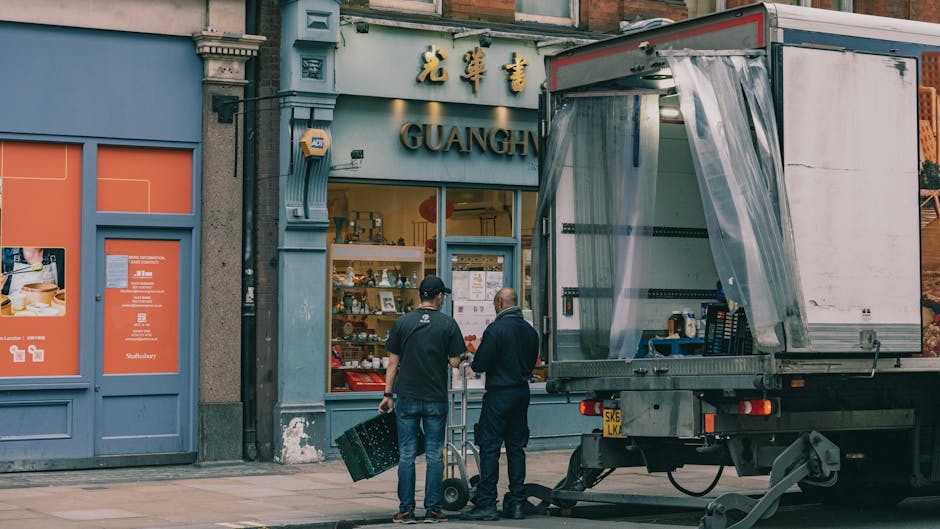
Canonbury Station removals short walk loading solutions: a practical guide for easier loading in N1
If you are planning a move near Canonbury Station, you have probably already spotted the awkward bit: the short walk between the van and the front door. It sounds minor. It rarely is. Narrow pavements, parked cars, awkward stairwells, rail-side traffic, and the simple reality of carrying a sofa further than you expected can all slow everything down.
This guide to Canonbury Station removals short walk loading solutions breaks down how to make those small-distance moves smoother, safer, and less stressful. Whether you are moving from a flat off the station, clearing a family home, or shifting office items that need careful handling, the aim is the same: reduce wasted steps, protect your belongings, and keep the moving day flowing.
To be fair, most removal problems in this kind of area are not dramatic. They are just fiddly. And fiddly is where good planning earns its keep.
- Why short-walk loading matters near Canonbury Station
- How the loading process works
- Key benefits and practical advantages
- Who this is for and when it makes sense
- Step-by-step guidance
- Expert tips for better results
- Common mistakes to avoid
- Tools, resources and recommendations
- Law, compliance, standards and best practice
- Options, methods and comparison table
- Case study or real-world example
- Practical checklist
- Conclusion
- Frequently asked questions
Why Canonbury Station removals short walk loading solutions Matters
Canonbury Station sits in a part of Islington where access can be deceptively tricky. The roads may look manageable on a map, but in practice you may be dealing with tight residential streets, limited stopping room, shared access, and the occasional hopeful driver who has left just enough space for nobody. That is where short-walk loading solutions come in.
Short-walk loading means the van cannot stop right at the door, so items have to be carried a short distance between property and vehicle. Sometimes it is only 10 or 20 metres. Sometimes it feels much longer when you are on your third trip with a wardrobe door under your arm and the rain starts. The point is not the distance alone; it is the number of variables that turn a simple carry into a bottleneck.
Near Canonbury Station, these variables often include time-limited parking, busy commuter windows, restricted access around rail-adjacent streets, and shared pavements that need careful handling. If the loading plan is weak, the whole move can drift off schedule. If it is strong, the move feels calm, even if the route from flat to van is a bit annoying. Little difference, big impact.
It also matters because poor loading planning increases risk: more lifting, more carrying, more chances of a knock to the wall, a scrape to a bannister, or worse, an injury. You do not need a dramatic failure for this to matter. A few avoidable delays and a tired crew are enough to turn moving day sour.
Expert summary: short-walk loading is not just a workaround for awkward streets; it is a practical method for controlling time, safety, and damage risk when direct van access is limited.
How Canonbury Station removals short walk loading solutions Works
At its simplest, the process is about minimising friction between the property and the vehicle. The team identifies a sensible loading point, plans the carry route, stages items near the exit, and uses the right equipment to move goods efficiently over a short distance.
That sounds straightforward, and sometimes it is. But the details matter. A successful short-walk load usually includes:
- a pre-agreed stopping point for the van
- a clear route from the property to the vehicle
- good timing around traffic and neighbours
- protective wrapping and load preparation before carrying begins
- the right number of movers for the item size and building layout
In the real world, there is often a trade-off between stopping as close as legally possible and stopping where the street actually allows safe loading. Sometimes that means a bay space. Sometimes it means a side street. Occasionally it means a slightly longer walk but a much cleaner loading process overall. And honestly, that trade-off is often worth it.
For example, a sofa move from a first-floor flat near Canonbury Station might look like this: the van parks on a nearby street with reasonable access, the team clears the hallway, pads the sofa, and carries it in one steady movement rather than taking risky shortcuts down a cramped staircase. The entire move can be faster because the team is not improvising every two minutes.
If your move also involves packing help, it can be smart to combine short-walk loading with packing and unpacking services so items are ready to move cleanly instead of being rushed into boxes five minutes before collection. That tends to pay off, especially when the day already has enough moving parts. Literally.
Key Benefits and Practical Advantages
Short-walk loading solutions are not just for awkward streets. They bring proper operational benefits, especially in built-up London areas where access is rarely perfect.
1. Better time control
When the loading plan is tight, the team spends less time making improvised decisions. That means fewer pauses, fewer false starts, and fewer trips that begin with "let's just see if we can squeeze through here." You will notice the difference in pace almost immediately.
2. Less damage risk
Carrying items a short distance under supervision is generally safer than trying to force a van into a poor stopping position or rush items through a cramped entry. Good loading control helps protect floors, walls, doors, and furniture edges. It is a bit boring, but boring is good when the alternative is a chipped table leg.
3. Lower physical strain
When movers can plan the carry properly, they are less likely to twist awkwardly, overreach, or take unsafe shortcuts. That matters for everyone involved. A smoother route is kinder on people's backs, shoulders, and knees, which sounds obvious until you are on move day and every step counts.
4. More flexibility in busy streets
Near Canonbury Station, there may be times when the best stopping place is not directly outside the property. A short-walk solution gives you flexibility. The van can be placed where it is safe and legal, rather than where it is most convenient on a fantasy level.
5. Better coordination for flats and period homes
Many homes around Canonbury involve staircases, narrow hallways, shared entrances, or older layouts that were not designed with modern furniture in mind. Short-walk loading works well alongside careful removal handling and can be paired with house removals for full domestic moves where access is only part of the challenge.
| Approach | Best for | Main advantage | Main limitation |
|---|---|---|---|
| Direct kerbside loading | Wide streets with open access | Shortest carry distance | Not always possible near Canonbury Station |
| Short-walk loading | Busy or restricted streets | Balances access and safety | Needs careful route planning |
| Staged loading from inside | Bulky moves or complex buildings | Improves organisation | Requires space inside the property |
| Mixed access plan | Moves with changing conditions | Flexible and realistic | Needs good communication |
Who This Is For and When It Makes Sense
This kind of loading solution makes sense for a wide range of people, not just those with obvious access issues. Truth be told, many moves near Canonbury Station benefit from it even if everything seems straightforward at the quote stage.
You are likely a good fit if you are:
- moving from a flat on a narrow residential street
- living in a terrace or conversion with limited front access
- moving on a day with parking restrictions or busy traffic
- shifting furniture that cannot be carried casually by one person
- trying to reduce disruption for neighbours or building residents
- working to a tight schedule around handover times
It also makes sense for landlords, letting agents, and small businesses. An office clear-out, for instance, can be completed more neatly when loading is planned around a short carry from building to van rather than an all-out scramble. For business moves, services like office removals can be a practical fit when you need things done efficiently without making a scene outside the building.
Another common scenario is the urgent move. Perhaps the tenancy has changed, the keys are due back by lunch, and you are still staring at a room full of bags. It happens. In those situations, short-walk loading can help cut wasted time and make the whole thing feel less chaotic. If that is your world right now, removals near me searches often end up here for a reason: people want practical help, not airy promises.
Step-by-Step Guidance
If you want the loading side of a Canonbury move to feel controlled rather than frantic, use a simple process. Nothing fancy. Just properly thought through.
Step 1: Map the access before move day
Look at the route from door to van. Where are the pinch points? Is there a step, a gate, a narrow pavement section, or a blind corner? If possible, walk it once while holding a box or small item. That tiny rehearsal can reveal all sorts of irritating details.
Step 2: Decide the safest stopping point
Do not choose the closest spot automatically. Choose the safest practical stopping point. A spot that is slightly further away but keeps loading clear and legal is usually better than squeezing into a poor position and spending ten minutes adjusting later. This is one of those times where less clever is more sensible.
Step 3: Stage items near the exit
Bring items to the threshold in the right order. Heavier and awkward items should be ready when the crew is fresh. Smaller boxes can be grouped and loaded efficiently once the larger pieces are on the van.
Step 4: Protect both item and building
Wrap fragile furniture, secure loose parts, and protect walls and doors where items will pass. A doorframe chip is annoying. A scratched piano? Much worse. If you need more careful handling for delicate pieces, professional man with van removal support can be a sensible option for smaller, controlled loads.
Step 5: Load in the right order
Load the heaviest and most stable items first, then build around them. Keep essential items accessible if you will need them quickly at the other end. It sounds simple because it is simple, but simple done well saves headaches.
Step 6: Keep one person focused on flow
On a real move, someone should be watching the route, the sequence, and the timing rather than just lifting. That role often gets overlooked. It should not. One person keeping an eye on the bigger picture can stop bottlenecks before they start.
Step 7: Recheck the final room and external route
Before the vehicle leaves, do one last check of cupboards, loft access, hallway corners, and outside loading space. Every mover has at least one story about the "one final item" found after departure. No one enjoys that moment.
Expert Tips for Better Results
A few small adjustments make a surprisingly big difference when you are dealing with short-walk loading near Canonbury Station. In our experience, the best moves usually look calm because someone did the unglamorous prep work first.
Choose timing carefully
Early mornings can be easier for access, but that depends on the street and the building. Midday might suit some roads better. The right time is not always the same as the most convenient time for you, and that is fine. A half-hour shift can save a lot of waiting.
Break the move into zones
Think in terms of zones: inside staging, doorway transition, carry route, and van loading point. Once you view the move this way, problems become easier to solve. For example, if the doorway is narrow, move the staging point back a little and create space there instead.
Use labelled boxes and priority items
This helps enormously when short-walk loading is involved because the crew can keep the flow moving without constantly asking what goes where. Label fragile items clearly, and keep a first-night bag separate. You really do not want to be hunting for phone chargers while standing in a half-empty flat.
Communicate the awkward bits early
If a sofa barely fits through the hallway, say so before move day. If there is a delivery obstruction or a very tight stair turn, mention that too. The team can then plan around it rather than discovering it while holding the item at shoulder height. Not ideal.
Have a backup loading option
Sometimes the first parking choice falls through. A good plan includes a secondary stopping point, even if it is less convenient. That backup can save the day when the street is unexpectedly busy or a bay is taken.
Keep refreshments and spare bags to hand
It may sound trivial, but small comforts help morale on a loading-heavy day. Water, gloves, tape, bin bags, and a couple of spare markers can make the moving area feel under control. Small things. Big mood lift.
Common Mistakes to Avoid
Most loading issues are predictable, which is why they are so annoying. The good news is that the common mistakes are avoidable if you slow down just enough to notice them.
- Assuming the van can stop right outside. In Canonbury, that may not be realistic. Always plan for a workable fallback.
- Ignoring the carry route. The shortest line is not always the easiest line. Steps, slopes, corners, and traffic all matter.
- Leaving packing until the last minute. Half-packed items slow the loading process and increase breakage risk.
- Overloading one person. A single helper trying to do everything often creates delays and strain.
- Not checking parking or access constraints. A good move can be derailed by something as simple as a bad stopping choice.
- Forgetting the exit sequence. If large items are trapped behind small boxes, the flow stalls.
There is another sneaky mistake too: underestimating how much time the final 20 metres takes. It does not sound like much, but if the route includes a doorway, a lift, a turn, and a pavement edge, the time adds up fast. That is where people get caught out.
Tools, Resources and Recommendations
Good loading work is partly about people and partly about having the right kit. You do not need a warehouse full of gear, but you do need sensible basics.
- Furniture blankets: help protect wood, polished surfaces, and corners.
- Webbing straps: useful for keeping items secure in the van.
- Tape and labels: help with box identification and quick sorting.
- Gloves: improve grip and reduce knocks during repeated carries.
- Trolleys or sack trucks: useful where the route and item type allow them.
- Door protectors or corner guards: handy for tight entrances and stairwells.
For people who want a broader moving service rather than a simple carry-and-load job, options such as man and van or removal services can suit smaller homes, furniture runs, or multi-item moves. If you are comparing approaches, it is worth looking at moving van and movers support as part of the bigger picture too.
For those concerned about pricing, the most useful step is to request a clear quote that reflects access, item volume, and any carrying distance. You can review pricing and quotes before deciding. That tends to beat guessing, which, let's face it, rarely ends well.
Law, Compliance, Standards, or Best Practice
For London removals, the practical compliance side is mostly about safe parking, sensible loading, and avoiding obstruction or unsafe handling. Exact rules can vary by location, timing, and street controls, so it is wise to check the arrangements for your specific move rather than assume the usual spot will be available.
Best practice generally includes:
- parking only where the vehicle can load safely and legally
- keeping pavements and entrances as clear as possible
- using enough people for heavy or awkward items
- protecting shared property areas from damage
- maintaining good communication with residents or building managers where needed
On the safety side, it is sensible to use a provider that takes handling and vehicle safety seriously. If you want to understand the approach to risk and vehicle safety in plain English, review the company's health and safety policy and insurance and safety information. Those details matter more than many people think, especially when items are expensive, bulky, or difficult to replace.
There is also a sustainability angle. Reusable materials, efficient routing, and responsible disposal all help reduce waste during the move. If that matters to you, see the recycling and sustainability approach too. Small choices add up, honestly.
Options, Methods, or Comparison Table
Not every move near Canonbury Station needs the same loading style. The right option depends on access, item type, and how much support you want on the day.
| Method | Best used when | Strength | Trade-off |
|---|---|---|---|
| Short-walk loading | The van must park a little away from the door | Flexible and realistic for urban streets | Needs good route planning |
| Man and van service | You need adaptable support for smaller or mixed loads | Cost-effective and practical | May require more coordination if access is tight |
| Full house removals | You are moving a full property with multiple rooms | Structured and less hands-on for you | Usually more planning involved |
| Furniture-only collection | You are shifting a few large pieces | Simple and direct | Less suitable for complex access or mixed loads |
For many Canonbury moves, a hybrid approach works best. You might use short-walk loading with a smaller van, or combine the loading plan with furniture pick-up if you only need selected items moved. If your move is larger, home moves support can provide the broader structure you need without making the day feel like a logistical puzzle.
Case Study or Real-World Example
A typical Canonbury scenario might look like this: a two-bedroom flat is being cleared on a weekday morning, and the nearest practical stopping point is a short walk away from the entrance. The building sits on a road where parking is tight and there is not much space to linger. Nothing dramatic, just urban reality.
The moving plan starts by separating fragile items, large furniture, and daily essentials. The movers check the route from flat to van, note one narrow corner near the doorway, and place protective covering where the wardrobe and mirror will pass. The van parks in the pre-agreed spot. One person keeps the loading flow moving, while another manages bulky items at the exit.
Because the team planned for the short carry, there is no last-minute panic about where to park or which side of the street to use. The load is staged in the right order, and each trip between the flat and the vehicle is deliberate, not rushed. The move still takes work - no magic wand here - but it feels controlled. That is the real win.
In a similar job involving a tenant moving out after a long week, the biggest relief was not speed. It was clarity. Everyone knew where the van would stop, what would go first, and which items should stay accessible. That is what good short-walk loading actually delivers: less uncertainty, fewer surprises, and a much calmer finish.
Practical Checklist
Use this checklist before move day if you want the loading side to go more smoothly.
- Confirm where the vehicle can safely stop.
- Walk the route from property to loading point.
- Measure or inspect large items that may be awkward to carry.
- Pack and label boxes before the crew arrives.
- Protect fragile corners, mirrors, and surfaces.
- Keep keys, documents, and essentials separate.
- Tell the team about stairs, gates, or tight turns in advance.
- Check whether any parking or access arrangements need advance notice.
- Prepare a backup loading spot if the first one is occupied.
- Have water, tape, and spare bags nearby.
- Plan the unload at the destination, not just the pickup.
- Do one final room check before departure.
Quick takeaway: if your loading plan is clear before the van arrives, the whole move becomes easier. Not perfect, maybe. But easier. And on moving day, that counts for a lot.
Get a free quote today and see how much you can save.
Conclusion
Canonbury Station removals short walk loading solutions are really about making a practical move out of a slightly awkward environment. They help you manage tight streets, limited stopping space, and the everyday realities of carrying belongings a short distance without turning the day into a scramble.
The best results come from simple habits: plan the access, stage the items, protect the building, and keep the loading sequence clear. If you do those things well, even a fiddly move can feel surprisingly manageable. That is the whole game, really.
If you are moving in the area, a calm plan and the right support can make the difference between a stressful day and one that just gets on with it. And sometimes, that quiet sense of control is worth more than anything else.
Frequently Asked Questions
What are Canonbury Station removals short walk loading solutions?
They are moving plans designed for situations where a van cannot stop directly outside the property, so items are carried a short distance between the door and the vehicle. The goal is to keep the move safe, efficient, and well organised.
Why is short-walk loading useful near Canonbury Station?
Because local streets can be busy, narrow, or restricted for stopping. A short-walk plan gives you flexibility when direct kerbside access is not realistic, which is often the case in built-up parts of Islington.
Does short-walk loading make a move slower?
Not necessarily. If the route is planned properly, it can actually save time by reducing confusion and awkward repositioning. A controlled short carry is often faster than repeatedly adjusting a badly parked van.
Is this suitable for flats with stairs?
Yes, especially where stair access and street access both need careful planning. Short-walk loading often works well alongside flat removals because it allows the crew to manage both the carry route and the loading point more effectively.
What if the van cannot park right outside at all?
That is exactly when short-walk loading becomes useful. A nearby safe stopping point, even if it is not directly outside, can still create a workable and efficient move.
Can I use a man and van service for this type of move?
Yes. A flexible man with van arrangement is often a good fit for short-walk loading, especially if you are moving a few large items or a smaller home load.
How much preparation do I need to do before the movers arrive?
Quite a bit helps. Boxes should be packed, large items should be ready to move, and the route should be clear. The more prepared the property is, the easier the short carry becomes.
What items are hardest to move with a short-walk load?
Bulky, heavy, or awkward items like sofas, wardrobes, beds, mirrors, and pianos usually require the most planning. Their size and shape can make narrow turns and short carries harder than they first look.
Are there safety concerns with short-walk loading?
Yes, mainly around lifting, carrying, trip hazards, and poor parking choices. Good handling methods, sensible team size, and proper route planning reduce these risks significantly.
Should I worry about parking rules near Canonbury Station?
You should always check access and parking arrangements in advance. Local rules can affect where a vehicle can stop, and it is better to plan legally and safely than to improvise on the day.
Can short-walk loading work for office moves too?
Yes. It is often useful for small business relocations or building clear-outs where the loading point is close but not directly outside the door. For bigger commercial jobs, coordinated commercial moves or office relocation services may be more appropriate.
What should I ask for when getting a quote?
Ask how access is assessed, whether the quote accounts for walking distance from property to van, and what is included for packing or handling. Clear quotes are easier to compare and usually lead to fewer surprises later.
How do I make the move feel less stressful?
Keep the plan simple. Confirm the loading point, label your items, and tell the team about any awkward access in advance. If the moving day feels a bit much, that is normal. A decent plan goes a long way.